
The Jaipur House Hotel Review: A Royal Heritage Stay in Mount Abu, India
After months of travelling around India by train with an enormous backpack and staying primarily in budget accommodation, I found myself checking into a former royal summer residence in Rajasthan.
The Jaipur House in Mount Abu (renamed Abu Raj in 2026) was unlike anywhere else I’d stayed during my trip. Perched on a hill overlooking Nakki Lake and the Aravalli mountains, this heritage hotel offered beautiful gardens, spacious rooms and a welcome change of pace.
With my degree in Art History and professional background in interior design, I’m particularly interested in historic buildings that have been given a new purpose.
The Jaipur House is a fascinating example. Once a private retreat for Jaipur’s royal family, the property became a heritage hotel and has since been extensively redesigned by Dutch designer Marie-Anne Oudejans.
I’m sharing my experience staying at The Jaipur House, original photographs from my travel archive, the history behind this former royal residence and what you should know if you’re considering staying at the hotel today.
The Jaipur House at a Glance
Location: Near Nakki Lake, Mount Abu (Abu Raj), Rajasthan, India.
Hotel type: Royal heritage boutique hotel.
Highlights: Historic architecture, gardens, mountain views, swimming pool and redesigned interiors.
Best for: Heritage accommodation, architecture lovers and relaxing mountain getaways.
Getting there: Abu Road railway station, approximately 28 km away.
Book your stay: Check availability and room rates at The Jaipur House.
Planning a stay in Mount Abu?
Check room rates and availability at The Jaipur House or compare other hotels in Mount Abu to find accommodation that suits your travel style and budget.
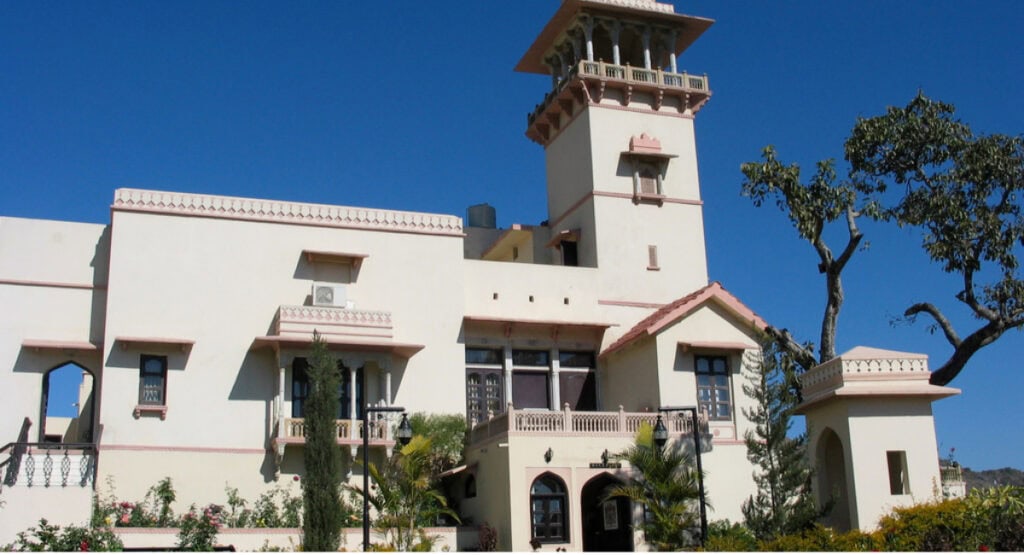
The History of The Jaipur House
Built in 1897 by Maharaja Sawai Ram Singh II, The Jaipur House served as a private summer retreat for Jaipur’s royal family.
Mount Abu’s cooler mountain climate offered an escape from the heat of Rajasthan’s plains, while the residence’s elevated position provided sweeping views of Nakki Lake and the surrounding Aravalli mountains.
The property remained a royal retreat until 2002, when Maharaja Sawai Bhawani Singh and Maharani Padmini Devi converted it into a heritage hotel.
I stayed at The Jaipur House during its early years as a hotel, when its interiors looked considerably different from those guests experience today.
More recently, Sawai Padmanabh Singh continued the family’s association with the property, overseeing its transformation into a boutique hotel with interiors by Dutch designer Marie-Anne Oudejans.
What appeals to me about heritage accommodation is the opportunity to experience historic architecture beyond a brief sightseeing visit. You can appreciate the details of a building at different times of the day, spend time in its gardens and get a better sense of what made its location appealing in the first place.
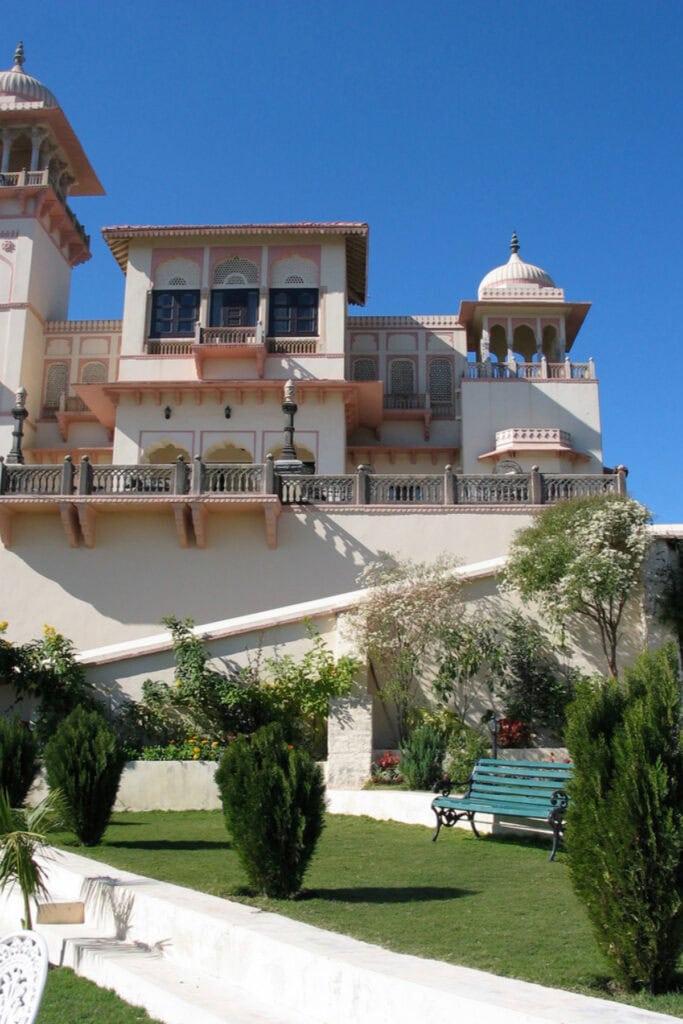
Look a Little Closer: Chhatris
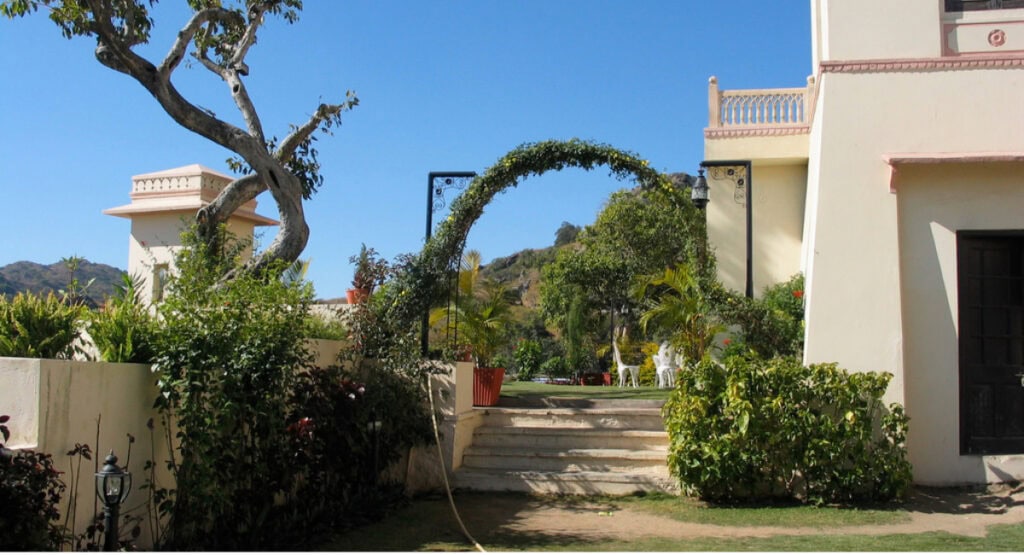
Notice the small domed pavilions on the exterior of the Jaipur House. Known as chhatris, these architectural features are commonly associated with Rajput palaces, royal residences and monuments throughout Rajasthan.
My Experience Staying at The Jaipur House
My best friend and I chose Mount Abu as a stop between Ahmedabad and Delhi towards the end of our extended journey through India.
After months of backpacking, we were ready to spend a few days somewhere comfortable with beautiful surroundings.
Unfortunately, we arrived during a sporting event that we hadn’t known about. The Jaipur House was unavailable that evening, so we spent our first night in a budget hotel with stained walls and rather questionable bedding.
Checking into a former royal summer residence the following day felt like quite the upgrade!
What appealed to me about The Jaipur House was that the accommodation itself became part of the travel experience. I could spend hours photographing flowers in the gardens, admiring the architectural details and enjoying the views of the Aravalli mountains.
After months of travelling on a limited budget, this was one of those occasions when spending more on accommodation was worthwhile.
Rooms and Interiors at The Jaipur House
What Our Room Was Like
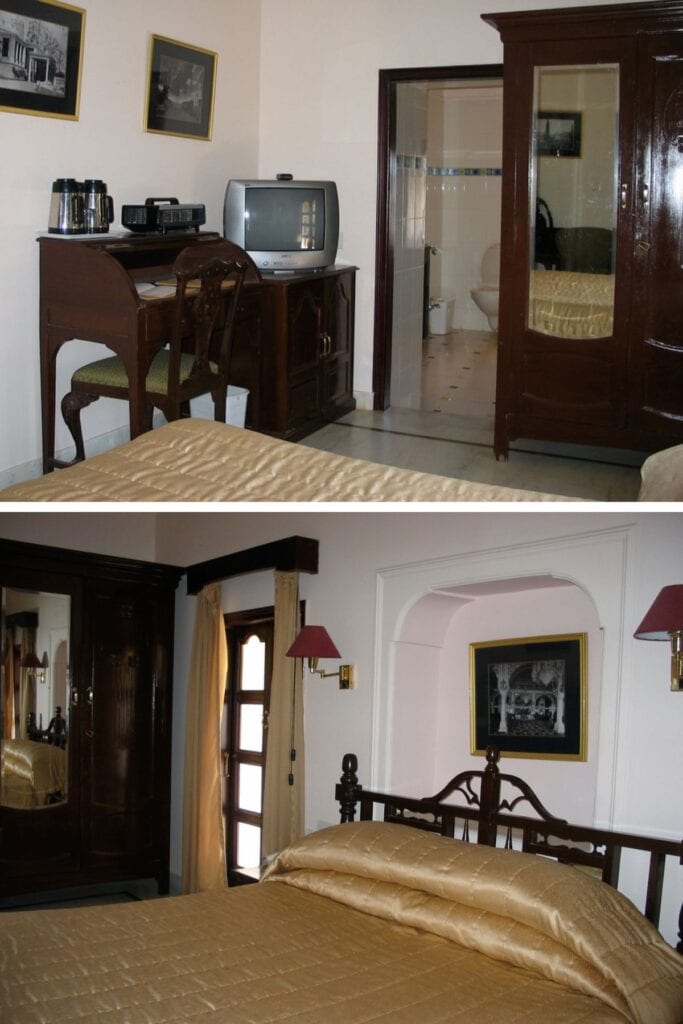
Our room was spacious, furnished with dark wooden furniture, gold-coloured bedding and framed architectural photographs.
I remember being particularly impressed by the large bathtub. After months of staying in budget accommodation across India, having a bathtub seemed like quite a luxury.
The only problem? There was never going to be enough hot water to fill it! Fortunately, the weather was pleasantly mild, and I was quite happy without a bath.
The room and its furnishings have since changed considerably following the hotel’s redesign. My original photographs offer a glimpse of The Jaipur House during its earlier years as a heritage hotel.
If you’re considering staying here, view the current room photographs, prices and availability at The Jaipur House before choosing your accommodation.
| Room Type | Features | Best For |
|---|---|---|
| Superior Room | Colourful interiors and geometric patterns | Couples and solo travellers |
| Cottage Villa | Two-bedroom colonial-style cottage with outdoor showers | Friends travelling together |
| Royal Suite | Jewel-toned interiors in rooms formerly occupied by royalty | Special occasions and heritage stays |
Gardens, Terraces and Mountain Views
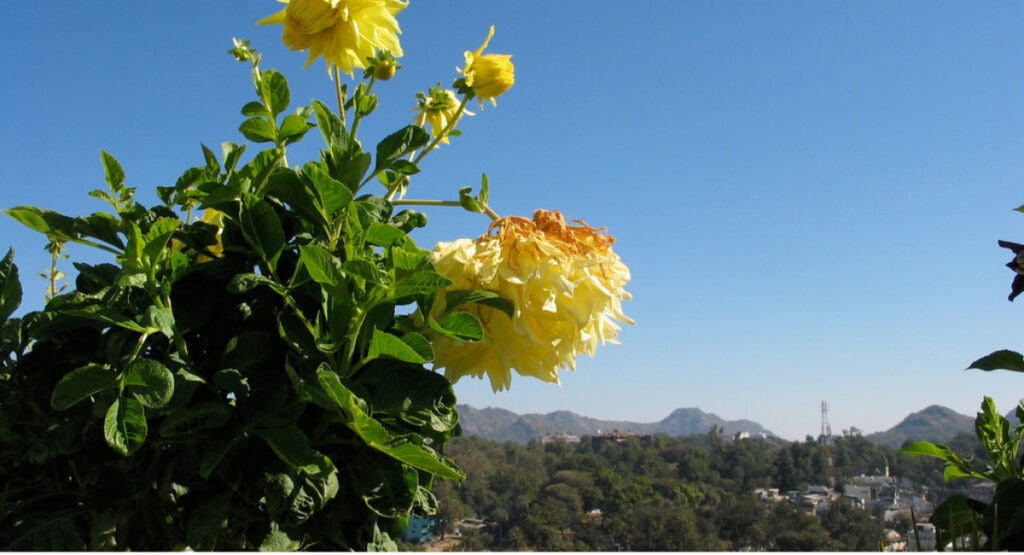
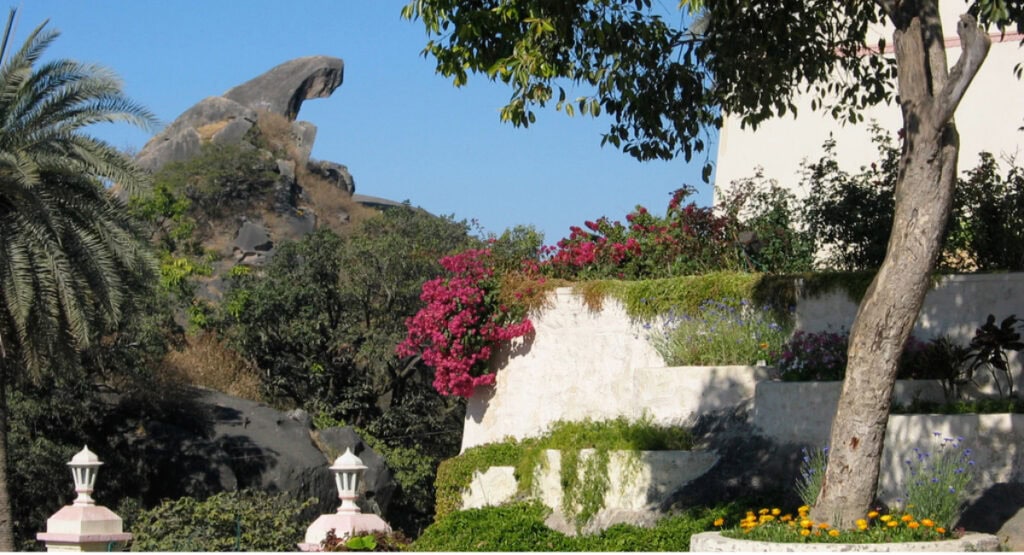
Looking through my photographs from The Jaipur House, it’s apparent how much time I spent in the gardens.
I photographed colourful hibiscus flowers, landscaped terraces, architectural details and the surrounding mountains. From the grounds, I could also see Toad Rock, the distinctive rock formation overlooking Nakki Lake.
The Jaipur House’s elevated position is one of its biggest selling points. Unlike accommodation in the centre of Mount Abu, the hotel offers a different perspective of the hill station and its surrounding landscape.
For me, being able to sit outside and appreciate the scenery without having to travel anywhere was one of the highlights of staying here.
If you’re comparing hotels in Mount Abu with mountain views, consider how much time you actually want to spend at your accommodation. A hotel with beautiful outdoor spaces can be worth the additional expense if you intend to make use of them.
Slow Travel Tip: Make Time to Enjoy Your Accommodation
If you’re splurging on a heritage hotel, leave some room in your itinerary to enjoy it. Spending the entire day sightseeing means missing out on the gardens, terraces and other spaces you’re paying to experience.
Dining at The Jaipur House
One of my most amusing memories of staying at The Jaipur House involves something as simple as ordering black coffee.
The hotel had a rather fancy coffee machine that produced a layer of crema, making the coffee look as though milk had been added.
My best friend asked for another cup, only for the replacement to look exactly the same. It turned out that this was simply how the machine prepared the coffee!
It’s funny what you remember about a hotel stay years later.
Today, The Jaipur House offers several dining spaces, including an outdoor garden café, a restaurant serving multiple cuisines and a polo-inspired rooftop lounge.
If you’re planning a relaxing stay, having dining options at the hotel is particularly convenient on days when you don’t feel like heading into town.
As a vegan traveller, I’d recommend contacting the hotel before your stay to discuss plant-based meal options, particularly if you intend to eat most of your meals at the property.
The Jaipur House’s 2024 Redesign
As a former interior designer, I was particularly interested to see how The Jaipur House had changed since my stay.
The property underwent an extensive redesign led by Dutch designer Marie-Anne Oudejans, commissioned by Sawai Padmanabh Singh of Jaipur’s royal family.
The redesigned hotel was featured in Architectural Digest in July 2024 and subsequently included in its 2024 Hotel Great Design Awards.
The interiors are now characterized by bold stripes, geometric patterns, rich colours and a maximalist approach to decoration.
It’s a considerable departure from the more understated traditional furnishings I remember from my own stay.
What interests me most about the transformation is that the designer hasn’t attempted to make the property look like a conventional contemporary luxury hotel. Instead, the interiors offer a playful interpretation of royal heritage through colour, pattern and decorative details.
Looking at photographs of the redesigned spaces alongside my own photographs from 2004 provides an interesting opportunity to appreciate how historic accommodation evolves.
I’d love to return to The Jaipur House to experience its latest transformation in person.
If you’re interested in interior design, I recommend looking through the photographs in Architectural Digest’s feature on The Jaipur House before your visit.
Hotel Facilities and Amenities
Beyond its historic architecture and mountain setting, The Jaipur House currently advertises several facilities and experiences for guests.
- Outdoor swimming pool
- Lawn tennis courts
- Garden café
- Restaurant
- Rooftop lounge
- Landscaped gardens
- Organized heritage sightseeing tours
- Guided nature walks and trekking excursions
These additional facilities make The Jaipur House worth considering if you’re looking for a hotel where you can spend a considerable portion of your getaway.
Check current availability and room rates at The Jaipur House.
Location and How to Get to The Jaipur House
The Jaipur House is situated on a rocky hill overlooking Nakki Lake in Mount Abu (Abu Raj), Rajasthan, India.
Its elevated location provides beautiful views, although the hillside setting is worth considering if you have limited mobility or prefer accommodation with easy walking access to restaurants and shops.
The nearest railway station is Abu Road (ABR), approximately 28 kilometres from Mount Abu. From the railway station, you can arrange a taxi or continue by bus to the hill station.
My best friend and I arrived by train from Ahmedabad as part of our longer journey around India.
If you’re planning to arrive by train, contact the hotel about transfer arrangements before your journey.
Check Accessibility Before Booking
The Jaipur House occupies an elevated hillside setting. If stairs, steep paths or uneven surfaces are a concern, contact the hotel directly to ask about step-free access, room locations and transportation arrangements.
Things to Do Near The Jaipur House
I’d recommend spending at least two or three days in Mount Abu to enjoy both the hotel and the surrounding attractions.
Some of the experiences worth including in your visit are:
- Nakki Lake: Go pedal boating, enjoy the lakeside scenery or spend time browsing nearby shops.
- Dilwara Jain Temples: Appreciate the intricate white marble carvings of this historic temple complex.
- Toad Rock: Visit the distinctive rock formation overlooking Nakki Lake if you’re comfortable with steps and uneven terrain.
- Sunset Point: Enjoy views of the surrounding mountain landscape.
My 3-day Mount Abu itinerary includes my personal experiences, recommended activities, transportation advice and tips for planning a relaxing Rajasthan getaway.
Pros and Cons of Staying at The Jaipur House
✅ Pros
- Historic royal residence
- Mountain and lake views
- Beautiful gardens
- Distinctive redesigned interiors
- On-site dining
- Swimming pool and leisure facilities
❌ Cons
- Hillside location
- Premium accommodation pricing
- Potential mobility challenges
- May require transportation into town
Is The Jaipur House Worth Booking?
For me, the gardens and mountain views were what made staying here memorable. Being able to spend time in a former royal residence was a welcome change from the budget accommodation I’d been staying in throughout India.
Its subsequent redesign has added another dimension to the property, particularly for travellers interested in architecture and interior design.
Although my own stay took place before the renovation, The Jaipur House remains somewhere I’d love to return to.
If you’re looking for more affordable accommodation or prefer to stay closer to the town centre, you can also compare other hotels in Mount Abu.
Planning a stay in Mount Abu?
If you’re looking for heritage hotels in Mount Abu, The Jaipur House is particularly interesting for its royal history, distinctive architecture and hillside setting.
Plan Your Canadian Adventure
A few trusted resources I use and recommend:
- Booking.com (Hotels + Stays) – Find places to stay across Canada
Compare hotels, hostels, and vacation rentals using a handy map tool. - Discover Cars (Rental Vehicles) – Search Canadian car rentals
Easily compare prices from major rental companies for your road trip. - Busbud (Intercity Buses) – Book Canadian bus routes
Affordable bus travel between cities and small towns across Canada. - Viator (Tours & Activities) – Browse tours across Canada
From guided walks to scenic day trips, find local experiences worth booking. - Airalo (eSIM Cards) – Get a Canadian travel eSIM
Stay connected while you explore without needing a physical SIM card. - Safety Wing (Travel Insurance) – Explore travel insurance options
If you're visiting Canada from abroad, travel insurance is worth looking into. This platform helps you compare plans. (Not financial advice.)
