
What Is Quebec City Known For? 9 Things That Make It Magical
Wondering what Quebec City is known for—beyond the postcard-perfect photos? You’re not alone. Most guides toss around words like “European charm” and “French flair,” but if you’re planning a trip (especially as a first-timer), you need specifics.
So here they are.
As someone who spent 6 days walking, ferrying, touring, and eating my way around the city (seriously—I lost count of how many tours I took), I’m breaking down exactly what makes Quebec City famous—and what parts are actually worth your time as a traveller.
From centuries-old fortresses to seasonal maple sugar snacks, here’s what sets Quebec City apart—and how to experience it without falling into tourist traps or skipping the good stuff because you’re plant-based or car-free.
Let’s get into it.
Written by Tazim, a Canadian content creator who spent 6 days walking, eating, and exploring Quebec City solo—without a car, but with lots of curiosity (and snacks).

Still debating if it’s worth a trip? I break it down in my post all about whether Quebec City is worth visiting, especially if it’s your first time.
1. Quebec City’s History: Walls, Fortresses & Guided Tours
Quebec City is old. Like, founded-in-1608 old. That makes it one of the oldest cities in North America—and it shows (in a good way).
It’s also the only walled city north of Mexico. Yes, real city walls—like something out of a storybook or a strategy game. You can walk along the top of them and pretend you’re defending the town (or just looking for a good selfie spot).
What to Actually Do:
- Walk the fortified walls – They’re part of a UNESCO World Heritage site, and one of the last remaining city walls in all of North America.
- Visit the Citadel – It’s a star-shaped fortress that’s still in use. I did a guided tour and learned more about cannons than I ever expected.
- Join a walking tour – I did several. One involved ghost stories, one involved architecture, and all of them involved me asking way too many questions.
Even if you’re not a history person, it’s hard not to be impressed. The city blends past and present in a way that makes wandering around feel like time travel—just with better snacks.
I walked around solo, even at night, and always felt safe—get the full scoop in my Quebec City safety guide for solo travellers.

2. French Culture in Quebec City (Without Leaving Canada)
One of the first things people say about Quebec City is that it “feels like Europe.” And… yeah, it kind of does.
The architecture is French, the cafés are French, and the locals speak French. But you’re still in Canada, which means the power outlets are normal and you don’t need to trade your loonies for euros.
What to Expect:
- Signs, menus, and conversations will often be in French—but most people speak English, especially in shops and restaurants.
- Greet people with “bonjour” when you walk in somewhere. It’s a small thing, but it’s polite and it goes a long way.
- French flavour, Canadian chill – It’s not Paris. People are generally friendly and patient, even if you butcher your verbs.
You’ll hear church bells, smell fresh bread, and maybe spot someone carrying a baguette down the street. It’s charming in all the best ways—and you didn’t even have to go through customs in Charles de Gaulle.


3. Quebec City Food Scene: Classic Dishes + Vegan Finds
Quebec City is known for rich, traditional comfort food. Think:
- Poutine – fries, cheese curds, and gravy
- Tourtière – spiced meat pie
- Fèves au lard – sweet baked beans with pork
- Soupe aux pois – yellow pea soup with ham
- Cretons – pork spread served at breakfast
- Maple taffy and desserts – usually sweet, sticky, and seasonal
Now, if you’re plant-based or even just trying to eat a little lighter, that list might look… not so friendly. But don’t worry—you can still experience the food culture without just eating salad.

Here’s what I actually ate (and recommend):
- Poutine at Poutineville – Vegan cheese curds, plant-based gravy, crispy fries. It hits all the right notes.
- Vegan burger + fries at Chez Victor – Local chain with multiple veggie options that still feel indulgent.
- Poke bowl at Bols et Poké – Totally modern and customisable, with tofu and fresh toppings.
- Vegan desserts at the Fairmont – Housemade sorbet, fruit dishes, and lovely service.
- Pastries and soups – Found good vegan soups and baked goods at cafés and health shops. Always worth asking.
A Few Quick Tips:
- Most classic dishes are meat- or dairy-heavy, but more restaurants are offering alternatives—especially in summer.
- Health food shops like La Carotte Joyeuse and the app HappyCow helped me find snacks and spots on the go.
- Don’t skip dessert—Chocolats Favoris has sorbet and sometimes vegan-friendly chocolate dips.
📲 I used Airalo’s eSIM to find vegan eats and call Ubers across town—super helpful if you don’t speak French or have a Canadian SIM.
4. Quebec City Festivals: Winter, Summer & Seasonal Fun
Quebec City is famous for more than just food and architecture—it’s also known for its year-round festivals, especially in the heart of winter and peak summer.
The Big One:
Carnaval de Québec (Winter Carnival)
Held every February, this is one of the biggest winter festivals in the world.
- Expect snow sculptures, ice castles, night parades, and maple syrup poured onto fresh snow.
- You’ll also meet Bonhomme, the official snowman mascot. He’s on everything from posters to cookies—and somehow it works.
- It’s a fun time to visit if you’re okay bundling up and leaning into the snow globe vibe.
In Summer: Street Performers, Music, and Pop-Ups
When the weather warms up, the city comes alive outside.
- Street performers set up all around Old Quebec, especially near Rue du Petit-Champlain and Dufferin Terrace.
- You’ll find musicians, acrobats, artists, and festivals popping up almost every weekend.
- It’s walkable, lively, and full of little surprises—perfect if you like your sightseeing with a soundtrack.
Year-Round Cultural Highlights
- Fêtes de la Nouvelle-France (in August) celebrates the city’s 17th-century roots with costumes, music, and markets.
- Local markets like Marché du Vieux-Port are great for maple products, seasonal produce, and handmade goods.
- Some restaurants offer sugar shack–inspired menus in winter (just check for plant-based options).
Whether you’re planning a snowy escape or a summer weekend, there’s usually something festive happening—and it’s worth checking the calendar before your trip.
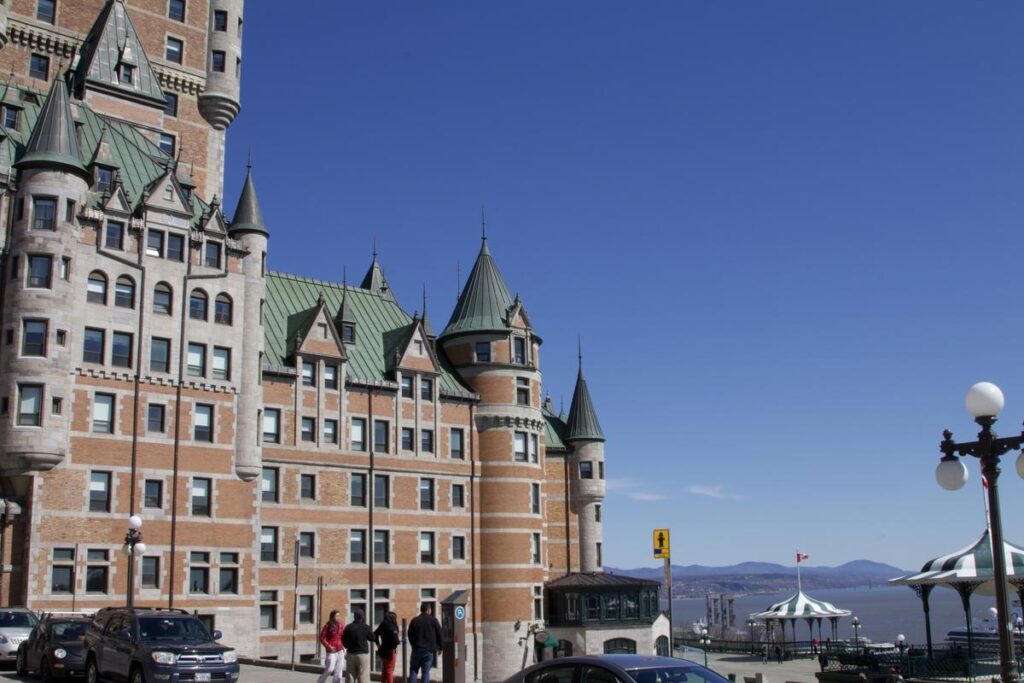
5. The Chateau Frontenac: Quebec’s Iconic Landmark
If you’ve seen a photo of Quebec City, you’ve seen Le Chateau Frontenac. It’s the massive, fairy-tale–looking hotel that towers above the old town, watching over the St. Lawrence River. And yes—it really is as grand as it looks.
But here’s the good part: even if you’re not staying there, you can still explore it.
Why It’s Worth Seeing:
- It’s one of the most photographed hotels in the world—and once you see it in person, you’ll get why.
- You can take a guided tour of the hotel to learn about its history, design, and celebrity guests. (I did—and yes, I took a lot of photos.)
- The lobby and public spaces are open to visitors, and you can grab a drink, browse the boutique, or just soak in the atmosphere.
Even if luxury hotels aren’t usually your thing, this one is more like a living museum—complete with river views, copper rooftops, and a location that makes everything else in the city feel just a little more magical.
🚶♀️ I booked several walking tours in Old Quebec and loved every one. See available tours here and pick one that fits your vibe—haunted history or French architecture, anyone?

6. The Plains of Abraham: History Meets Green Space
This massive cliffside park might look like a peaceful place to walk your dog or have a picnic—but it’s actually the site of one of the most important battles in Canadian history.
In 1759, during the Seven Years’ War, British and French forces fought here in the Battle of the Plains of Abraham. It lasted about 15 minutes (really), but it changed the course of Canadian history and handed control of Quebec to the British.
What to Do There Now:
- Wander the walking paths with sweeping views over the St. Lawrence River
- Visit the Joan of Arc Garden or stop by the Plains of Abraham Museum if you want to dive deeper
- Sit under a tree with a snack and soak in the scenery (this was one of my favourite spots in the whole city)
It’s green, it’s spacious, and it gives you a totally different feel from the tight, winding streets of Old Quebec. And yes—you can learn about a major war, then go get ice cream. That’s balance.

7. Quebec’s Hidden Gems: Streets, Shops & Local Spots
Quebec City is full of little surprises—and a lot of them aren’t in guidebooks. It’s the kind of place where even a grocery store or staircase can have a plaque and a story.
Here’s what locals (and curious travellers) know it for:
- The Funicular – This cliff-hugging elevator connects Lower Town and Upper Town without making you climb 30 flights of stairs. It’s been around since 1879, and it’s still one of the easiest ways to get from Petit-Champlain up to the Château Frontenac. Also? Great view while you ride.
- J.A. Moisan – Open since 1871, this is the oldest grocery store in North America. It’s part general store, part gourmet shop, and part time capsule. You can browse maple products, local teas, and snacks while admiring the original wood shelves and chandeliers.
- Breakneck Stairs (Escalier Casse-Cou) – These steep stairs are the oldest in the city and connect Lower Town to Côte de la Montagne. Walk them if you want a little adventure (or bragging rights), but maybe not after your second poutine.
- Rue du Petit-Champlain – North America’s oldest commercial street. It’s beautiful, yes—but also full of independent boutiques, Québec-made goods, and local art that doesn’t feel mass-produced.
- Original La Maison Simons – Quebec City is home to the very first Simons department store, opened in 1840. It’s still family-run and still here, tucked between historic buildings on Côte de la Fabrique.
This is a city that celebrates its history—not just in museums, but in everyday places you can actually explore. It’s not just about the big landmarks—it’s the details you stumble on while walking to dinner or wandering off-route that leave the biggest impression.

8. Day Trips from Quebec City: Waterfalls, Islands & Culture
Quebec City isn’t just a destination—it’s also a jumping-off point. That’s why so many cruise ships dock here during summer and fall. Travellers get a taste of Europe in a weekend stopover and often wish they’d booked longer.
It’s also perfectly placed for exploring more of the province:
- Île d’Orléans – A small island full of farm stands, wineries, and stunning countryside views. It’s an easy half-day trip that feels like rural France—without the flight.
- Montmorency Falls – Taller than Niagara, just 15 minutes from the city. You can bus, bike, or join a tour to see it.
- Wendake – A living Indigenous community that offers insight into Huron-Wendat culture. It’s respectful, educational, and not touristy.
- Saguenay–Lac-Saint-Jean – If you’ve got time for a longer road trip, the fjords and wildlife up north are unreal (I visited on a 4-day press trip and would absolutely return).
If you’re planning more than just a quick stop, Quebec City makes a great base for exploring beyond the old walls.
Don’t have a car? You can still experience everything the city offers—check out my no-car guide to getting around Quebec City with ease.
If you’ve got extra time, use my 4-day Quebec City itinerary to explore the city at a slower pace—plus some nearby gems.
❄️ Travelling solo or exploring in winter? I always recommend getting travel insurance—it’s a small thing that can make a big difference.
9. Quebec City by Season: Best Times to Visit
Yes, it gets cold. Really cold. But also beautiful.
Quebec City’s seasons are dramatic—in the best way. Here’s what it’s known for at different times of year:
- Winter (Dec–Feb) – Snow-covered streets, the famous Winter Carnival, and an actual ice hotel nearby. Magical, but very… coat-dependent.
- Spring (Mar–May) – Quiet, a bit slushy, but a good time for museums and lower hotel prices.
- Summer (Jun–Aug) – Festivals, ferries, patios, and peak charm. It’s busy, but for good reason.
- Fall (Sept–Oct) – Colourful leaves, harvest food, and fewer crowds. Plus cruise ship season, so the port gets lively.
Locals embrace every season here—and if you pack smart, you can too. Just be ready to walk (and layer).
For a deeper breakdown of crowds, climate, and photo ops, here’s my guide on the best time to visit Quebec City.
Book Your Trip to Québec City
✈️ Book Your Flight
CheapOair is a premier booking platform for finding affordable flights to destinations around the world. With its user-friendly interface and extensive range of options, you can easily compare prices and book the best deals for your next adventure. Click here—>Book your flights with CheapOair.
🏩 Book Your Accommodation
You can book your hotel with Booking.com and filter by location, price, and amenities. I find the Booking.com site easy to navigate and book from, but you could also try Expedia instead.
🥾 Book Your Tours and Activities
GetYourGuide is your go-to platform for discovering incredible travel experiences, no matter your destination. From bypassing long lines through their skip-the-line tickets at famous landmarks to joining insightful walking tours with local experts, GetYourGuide offers a variety of unique activities. Enjoy immersive food and drink tours, participate in hands-on cooking and craft classes, check off bucket list adventures, and explore niche experiences that are truly unparalleled. Click here —>Get your tickets and book your tours early to avoid disappointment.
Fever offers unique experiences like Candlelight Concerts and other music events, classes, and dance performances to round out your activities in Québec City (after all, I’m sure you don’t want to just check out tourist attractions, right?) Click here —>Grab your tickets and book your experiences.
🚙 Book Your Rental Car
Although Old Québec City is fairly walkable and compact, getting to the rest of Québec City would be easier if you rent a car. What I like about Rentalcars.com (powered by Booking.com) is that they search different rental car companies to find you the best deal to suit your needs. Click here—>Book your rental car.
🚨Don’t Forget Travel Insurance
I use SafetyWing’s travel medical insurance for unexpected travel mishaps. They cover $100 per night for hotel costs due to travel delays and up to $3000 for lost checked luggage. Plus, coverage works in more than 185 countries! Click here—>Get your travel insurance.
FAQs
What is Quebec City most known for?
Old Quebec, the Château Frontenac, French Canadian culture, and being the only walled city north of Mexico.
Is Quebec City walkable?
Yes—most attractions are within walking distance, but there are hills and cobblestones, so wear good shoes.
Do people speak English in Quebec City?
Yes, especially in tourist areas—but starting with “bonjour” is polite and appreciated.
So… Why Does Quebec City Matter?
Because it’s not just a “pretty old city.” It’s a place where history still shapes the streets, where culture is layered and lived in—not curated. It challenges your idea of what Canada looks like. It slows you down, in a good way.
You won’t leave with just a photo of the Château—you’ll leave with a mood, a memory, and probably a bag of maple candy.
→ Need help figuring out how to fit it all in? Start with my 2-day itinerary—it’s based on what I actually did, and what I’d repeat.
More Articles to Help You Plan Your Trip to Québec City
- Is Quebec City Worth Visiting? What You Need to Know
- What Is Quebec City Known For?
- Best Time to Visit Quebec City
- What to Bring to Québec: The Ultimate Packing Guide
- Getting to and Around Quebec City: A No-Car Travel Guide for First-Time Visitors
- Is Quebec City Safe? What Visitors Need to Know
- 1 Day in Quebec City: What to See, Eat and Skip
- 2 Days in Quebec City Itinerary to Make the Most of Your Time
- 4 Days in Quebec City Itinerary: Complete Guide
- The Best Vegan-Friendly Food in Québec City
- Vegan Poutine in Quebec City: Where to Get the Real Deal
- Quebec City in Summer: What to Expect [and How to Survive It]
- How to Visit Rue du Petit Champlain in Quebec City
- Wendake Québec Village
- Things to Do in Quebec City at Night [Scenic + No Bars]
- 11 Mistakes Visitors Make in Quebec City (and How to Avoid Them)
- Best Photo Spots in Quebec City That Don’t Feel Forced
- The Best Day Trips from Quebec City [That Are Actually Worth It]
- Things to Do on Île d’Orléans: A Day Trip from Québec City
- Fairmont Château Frontenac Review: Worth It?
Plan Your Canadian Adventure
A few trusted resources I use and recommend:
- Booking.com (Hotels + Stays) – Find places to stay across Canada
Compare hotels, hostels, and vacation rentals using a handy map tool. - Discover Cars (Rental Vehicles) – Search Canadian car rentals
Easily compare prices from major rental companies for your road trip. - Busbud (Intercity Buses) – Book Canadian bus routes
Affordable bus travel between cities and small towns across Canada. - Viator (Tours & Activities) – Browse tours across Canada
From guided walks to scenic day trips, find local experiences worth booking. - Airalo (eSIM Cards) – Get a Canadian travel eSIM
Stay connected while you explore without needing a physical SIM card. - Safety Wing (Travel Insurance) – Explore travel insurance options
If you're visiting Canada from abroad, travel insurance is worth looking into. This platform helps you compare plans. (Not financial advice.)
